Sunday, May 14, 2017

Airbus to display resilient PMR communications infrastructures and solutions at ShieldAfrica 2017

ShieldAfrica was started in 2013 and is a security conference for institutional and private operators to meet with companies to promote products and ideas, this years (2017) main theme is Safe Cities, component of Smart Cities, driving investment and economic development to the concept of connected and safer cities. Airbus are turning up to this years exhibition and they are showing off their PMR infrastructures, the source of the article is here, but you can read the whole lot below


To support the economic development of African societies and governments in a challenging security context, Airbus Defence and Space will show its latest radiocommunications technologies at the exhibition “ShieldAfrica” in Abidjan, Ivory Coast, in late January 2017.

Police, firefighters, and rescue services in Africa are increasingly in demand of more advanced and secured mobile communication tools. “ShieldAfrica” serves as a platform to discuss security applications which require sophisticated Professional Mobile Radio (PMR) technology on the continent.

Secure communications infrastructures

“Government organisations, such as police and emergency first responder services, need secure communications infrastructures for the whole of their national territory and also for critical sites, such as airports, ports and stadiums,” says Philippe Devos, Head of Strategic Campaigns and Government Affairs of Secure Land Communications at Airbus. “We can offer the needed communication means in Africa based on our profound experience as a world-leading PMR provider.†

African security and defence sectors

“Shieldafrica” is a key event for the African security and defence sectors and hosts the major players in this field, for instance African governments, the global security and defence industry and representatives of diplomacy. Besides showing newest achievements in mission critical communications, Airbus will also showcase the following solutions:


  • Tetra digital radio systemsassociated with modern command and control applications and handheld radios can support effectively shared network deployment models. With these systems at hand, dispatching positions of vehicles or persons can be managed easily by geolocalising Tetra subscribers or groups.


  • The Tactilon Agnetapp brings Tetra push-to-talk to an LTE smartphone. It allows users of commercial LTE networks to communicate securely within mission-critical Tetra networks.

  • < br>
  • The Tactilon Dabat, a smartphone and full Tetra radio in one device, enables users, such as police or firefighters, to operate securely with multimedia functions.


Providing interoperability

For more than 25 years, Airbus has equipped various governments around the world with resilient PMR communications infrastructures and solutions. The company has a proven track record of nationwide deployments providing interoperability to all security users organisations.

Thursday, March 16, 2017

How To Look After Your 2 Way Radio

Buying two way radio equipment is a very beneficial investment, but in order for you to get the most out of your money you should ensure that the equipment is well cared for. If you use and maintain your 2 way radios with proper care, they will function at their optimum capacity and you can expect them to last for many years. While no 2 way radio can last forever, there are some simple practices which can help extend the life expectancy of your 2 way radios and ensure they function at their very best. In this article, we are going to take a look at some of the top care tips for your 2 way radios;

Storage

You should always store your radio(s) correctly so as to keep it in a tip top condition. The ideal environment for storing your radio involves a cool and dry (ideally at room temperature, which should be about 72 degrees Fahrenheit) with limited exposure to the extreme weather conditions like excessive cold o r heat, and such other elements of water and sunlight. Excessive temperatures can easily damage the batteries; the moisture may end up corroding the batteries. Also, when storing your two way radio, you should make sure that it's turned off and batteries are removed.

Charging Your two way Radio


First of all, you should know that 2 way radios are usually slightly different, so you need to familiarize yourself with the specific charging instructions of your radio. That being so, it is important to note that nearly all of the manufacturers will advise that you to turn off your radio while it’s charging. If you do not, your radio will be drawing current and also charging at the same time, and this can end up shortening the lifespan of the battery.

Overcharging your radio batteries can also cause numerous problems and will have a negative impact on its' overall battery life, so you should make sure that when it's charged fully you unplug its' charger; do not leave it charging all through the night if its' likely to remain fully charged for a long period of time while its' still being charged. When you buy new batteries its' the only time you can leave the radio charging overnight before you start using them for the 1st time; it'll help you get the maximum battery capacity.

Day to Day Use

Every two way radios user should be very mindful of their daily use. Although there are some 2 way radios which are designed to be quite robust, like the explosion proof and waterproof radios, they should still be treated with great care, always. Even if you have a waterproof or explosion proof radio, do not subject it to extreme temperatures.

You should also avoid grabbing your 2 way radio by its' antenna, as this will eventually have a negative impact on your radio's reception and transmission quality. In addition, you should also avoid drops so as to maximize the long term functionality of your radio; consider using two way radio belt clips so as to reduce the chances of your radio getting dropped and subsequently getting damaged. Protecting the exterior of your radio helps protect its' interior, thus minimizing the repairs and the replacing of the equipment.

Another important tip to note when it comes to the day to day use of two way radios, is you should never expose your radio to any solvents (unless it has been designed to be used in the harsh conditions); this includes any cleaning fluids and alcohol. Also, try and stick with the accessories which are designed specifically for your particular type of radio; this is especially important when it comes to your radio battery , charger and adapter. Using an incompatible accessory can end up shortening your radio's lifespan and can even destroy it.

Cleaning Your two way Radio

You should regularly clean your radio to keep it in good working condition. The most effective and efficient way of cleaning your 2 way radio also happens to be one of the easiest ways as well; strong chemicals or intensive cleaning isn’t necessary. The only supplies you'll need include some water and a microfiber cloth. The microfiber cloth will effectively wipe away the smudges and dirt without causing any damage to your radio. As for the more stubborn marks and stains, you can use a damp cloth and then wipe until the radio is clean. Remember, never immerse your 2 way radio in water to clean it.

Conclusion

two way radios are among the most versatile and toughest communication solutions , often lasting for many years before needing any repairs or replacement. However, in order to extend the lifespan of your 2 way radio even further, it is best to employ the above tips for 2 way radio care to fully secure your investment. Protecting your 2 way radio will not only increase its' longevity, but it also ensures that you will always have reliable communications. Well, as you can see above, taking care of 2 way radio is relatively easy, and the amount of maintenance required is minimal. A simple cleaning now and then, proper handling, maintenance and storage is all you need in order to extend the lifespan of your 2 way radio and keep it in a great working condition.

Thursday, February 16, 2017

Communication: What You May Be Doing Wrong Without Even Realizing

Communication is the key to any business being successful, but communication comes in lots of different forms, understanding the right and proper way of communicating will see you through in your career very well. This article is a very good overview of what communication can mean to you.

As a professional, you certainly know the importance of effective communication. Being an effective communicator is not only about the message, it’s also about the mode of communication and the opportunities you provide for feedback.

Your inability to get the point across thwarts your efforts at effective communication. You can’t just send out a company-wide email and assume everything is copacetic if no one replies. The truth may be that you were ineffective as a communicator, and people didn’t understandâ€"or even pay attentionâ€"to your message.

There are some things you might be doing to undermine your effectiveness as a communicator, and you may not even know you’re doing them. Here are some communication pitfalls you should try to avoid:

Over-Communicating

You’re not an effective communicator if you just repeat the same message over and over. If you want to remind your employees about an important deadline, sending out a single reminder would be appropriate. Sending out multiple reminders, however, is overkillâ€"and possibly even an insult to your employees’ ability to remember information. Redundancy in your messages is not only unnecessary, but it’s also counterproductive and a waste of timeâ€"for you and your employees. Whenever you send out communication on an ongoing subject, make sure it offers added information and is not merely a reiteration of the material you already shared.

Relying Too Much on One Channel (Or the Wrong Channel)

Today’s technology makes it possible to communicate in many different ways. While it’s easy to do, you shouldn’t get stuck in one particular communication mode. There are so many digital communication channels that work really well these days. Email is a popular tactic and can work well, but people are inundated with email today and often suffer from “in-box overload.” So, you may want to consider using a combination of tactics for impactful news, such as the announcement of a merger or a high-level addition to the company management.

Consider a web-based meeting when you really want to make an impact. According to “The Evolution of Workâ€"The Changing Nature of the Global Workplace,” a study by ADP Research Institute®, nearly 80 percent of employees regard technology positively for allowing deeper connections across distance and time. It just makes sense to consider other forms of digital communication, such as mobile apps or an internal company website.

Being Indirect

Nobody likes to be the bearer of bad news, but it doesn’t help the situation to be vague or unclear. You should try to deliver important news in personâ€"and the more complicated or easily misunderstood the message is likely to be, the more it makes sense for you to sit down across from the personâ€"or teamâ€"to convey the message. A direct, in-person approach adds an important component to your communication: The ability to observe others’ facial expressions and body language, which allows you to ensure your message has been understood.

Ignoring Nonverbal Cues

If you listen only to a person words and ignore their nonverbal cues your direct communication may not be successful. Research conducted by Dr. Albert Mehrabian indicates that 55 percent of our intent is delivered through nonverbal elements, such as facial expressions, gestures, and postures. If employees seem to express agreement with a new policy, non verbal cues such as hunched shoulders, crossed arms, and lack of eye contact may indicate that you still have some work to do in order to get buy-in from your team.

Not Being Open

Secrecy in the workplace often erodes trust in leadership and foments gossip. By being more transparent in your communication, you foster a sense of belonging and trust. Knowledge replaces speculation, and can help reduce gossip and rumors.

Not Listening

Rememberâ€"communication is a two-way street. Soliciting feedback is one of the greatest ways for you to know what employees are truly thinking. If you want to improve your communication skills, heed this advice: Speak less, listen more. After you’ve had the opportunity to listen, you can fine-tune your communication skills to be more effective than before.

Tuesday, February 7, 2017

NFL investigating Giants for using two-way radio during game against Cowboys

Apparently using a two way radio during an American football game is frowned upon over in the good old US of A, This article is about a game between the Giants and the Cowboys. During a Game the coaching staff and Quarterback are not allowed to communicate if there is 15 seconds or less on the clock, this rule might have been broken with the use of a walkie talkie.

The NFL is investigating the Giants’ potentially rule-breaking use of a two-way radio during the team’s recent 10-7 win over the Dallas Cowboys.

The use of a two-way radio by a coach during a game is strictly against league rules, according to ESPN.

In the fourth quarter of the Cowboys game, Giants head coach Ben McAdoo was spotted using a walkie-talkie to communicate play calls with Eli Manning after his headset malfunctioned.

In the fourth quarter of the game, Giants head coach Ben McAdoo was spotted using a walkie-talkie to communicate play calls with Eli Manning after his headset malfunctioned.

The Cowboys issued a formal complaint to the league over the radio use, but the NFL’s investigation was already underway by the time Dallas contacted them.

The NFL has a rule against coaches using two-way handheld radios because the league cannot control when both parties are communicating.

A coach using a walkie-talkie makes it harder for the NFL to monitor a league rule that states communication from the sideline to the quarterback must end when 15 seconds are left on the play clock.

With headsets, the NFL has the power to shut off communication at will with a “cutoff switch operator,” ESPN reported.

The Giants had no comment when reached Thursday night.

McAdoo used the walkie talkie in question, however, for about four or five plays on the Giants’ fourth-quarter drive that ended in an Eli Manning interception on a pass intended for Victor Cruz.

McAdoo’s normal equipment malfunctioned and as the Giants worked to fix it, the coach was handed the walkie talkie temporarily because its signal was reaching Manning’s helmet.

As the Giants worked to correct McAdoo’s equipment, Odell Beckham Jr. could be seen running to the sideline to bring plays back to the huddle and Manning was heading over to the sideline, as well.

There is no evidence in reviewing the game film that demonstrates McAdoo was on the walkie talkie for longer than the allowed 15 seconds of communication with his quarterback.

There is also, of course, no evidence that the Giants gained any advantage even if he was. The drive ended in a turnover and the Giants’ offense stunk most of the night.

Tuesday, January 31, 2017

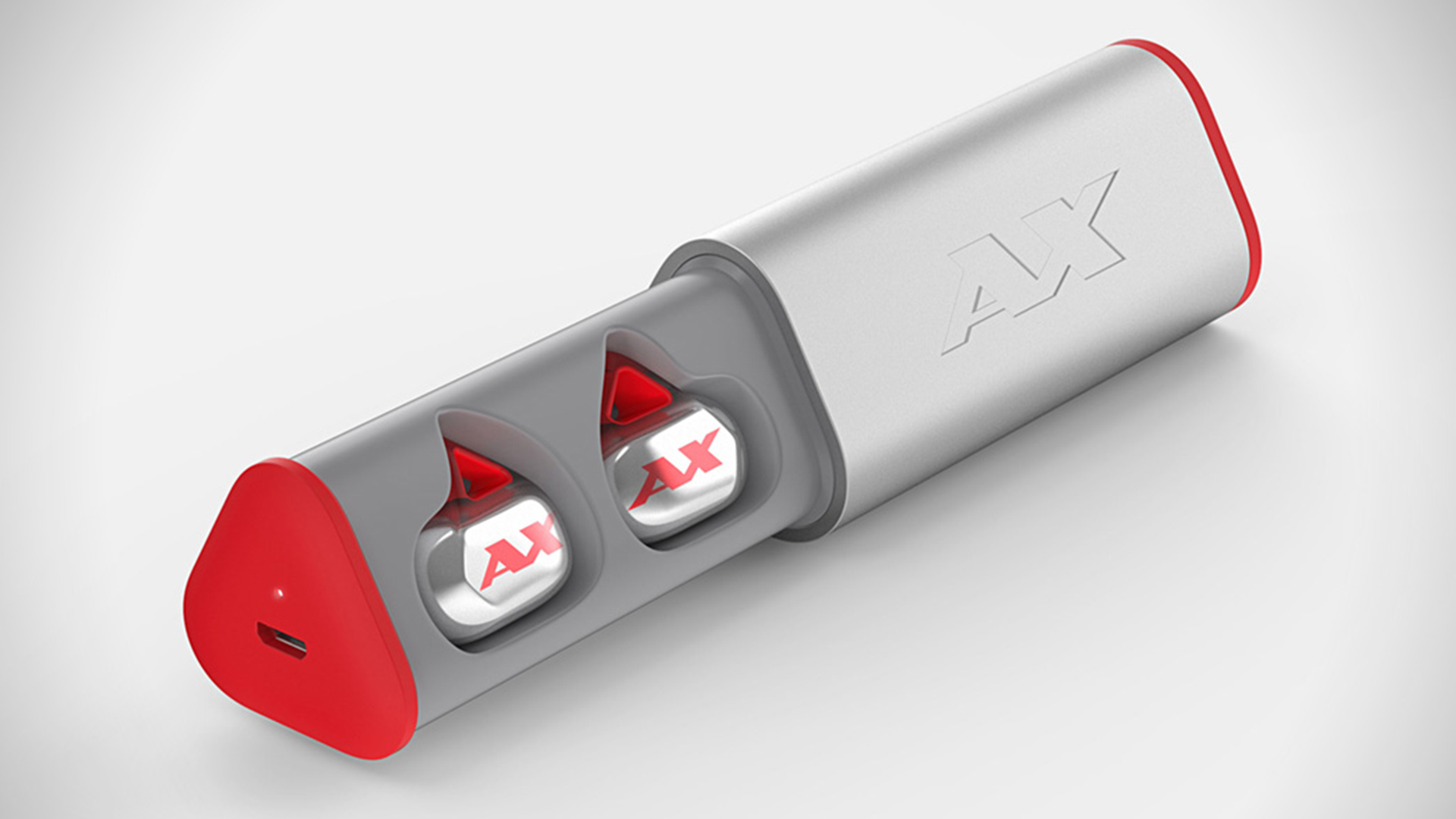
AXUM: THE FUTURE OF WIRELESS AUDIO

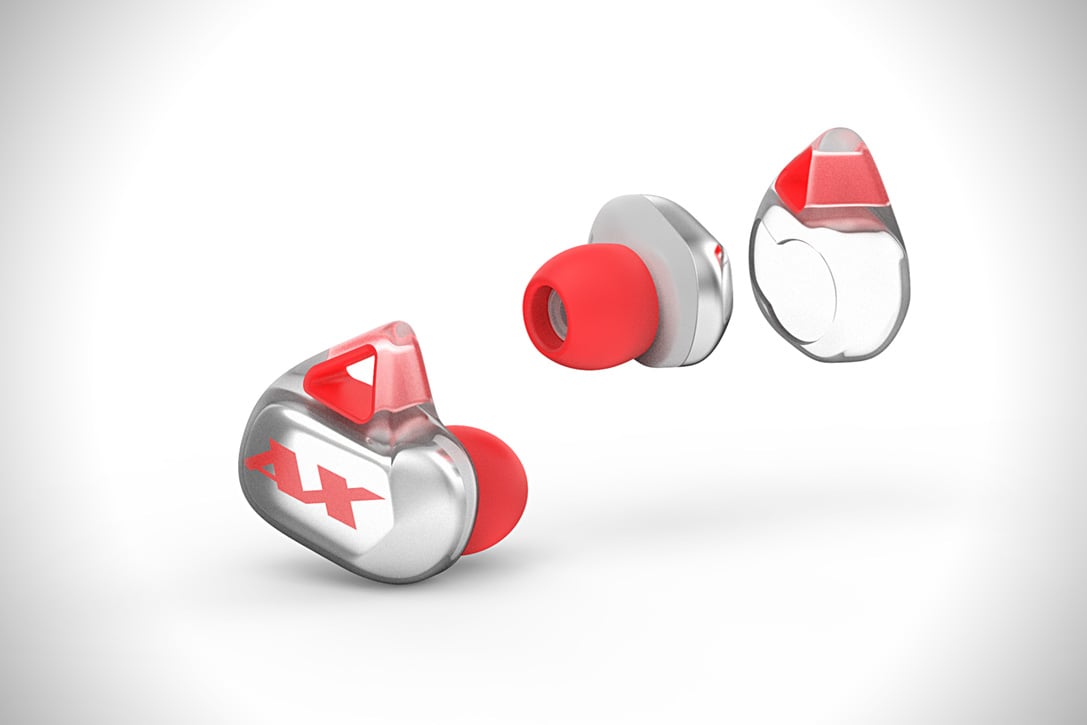
This article is the transcript of an interview with Igal Golva, CEO of Axum earphones, wireless earphones with secure fittings, designed for people doing exercise. A really interesting article about why these earphones are different to others on the market and what their plans are for the future of the company.

Mobile audio has always been a difficult balancing act. The need for great audio on the go has never been more prevalent. With smartphones now a staple for most people’s daily commute, exercise and fitness, the need for an audio solution that can be portable while still sounding good is the holy grail.

Apple, with the iPhone 7 has also forced people’s hands. The headphones they used to use are no longer as easy to pull out and plug in without the use of a dongle. This is where Bluetooth audio options come into play, and where the Axum wireless headphones are planning to make a splash. Currently on Indiegogo, the Axum are aiming to give people great audio, while ensuring they maintain that mobile, ultraportable feel. Currently at 528% funded, the Axum is proving to be a product many people want to get their hands on. We had a chance to talk to Igal Golvan, CEO at Axum, about what the headphones can do for audio and fitness and how they hope to change the way people view Bluetooth audio.

Axum: The Future of Wireless Audio 1

CGMagazine: Could you tell us a little about what Axum does and how these new headphones stand above the competition?

Igal Golvan: First of all, we not only offer four hours playtime (while others offer 1.5-2 hours) you can also get an additional four with the portable charging case. We achieved it by eliminating any unnecessary features. We are aiming to reach fitness junkies like us that need three things: fit, sound and battery life.

Our designers made a unique design that will fit you during the most extreme sport activities. In the last months all we did was test the earphones in every sport activity you can imagine .This included cycling, running, CrossFit , snowboarding and even sky diving .

The issue with True Wireless Earbuds is that all our competitors see this product as the latest technology in the headphones industry and as such they've aimed the technology at early adopters. Unlike them we understand the real potential of the product to become the mainstream earbuds of athletes, as the lack of cables is something so comfortable no one can even imagine, only when doing sport activities and listening to Axum earphones will you really understand the definition of freedom!

Axum: The Future of Wireless Audio 2

CGM: Could you go over what M-voiD® sound technology brings to the table?

IG: Sure. M-voiD stands for Multidisciplinary virtually optimized industrial Design. It’s a technology for the realistic simulation of audio systems using CAD data. It is a sophisticated technology that paves the way to reproduce outstanding sound performance to let consumers discover that earphones deliver the emotions and excitement comparable with a concert.

Realistic and predictive simulations by means of a fully coupled multiphysical electrical-mechanical-acoustical simulation model are the heart and driving backbone of M-voiD® technology. The major advantage of M-voiD® is that acoustic problems can be identified and resolved in the virtual domain before any prototype is being built.

Sound characteristics are virtually measurable and assessable and can be optimized on the virtual model. It is not just limited to the graphical reproduction. M-voiD® listens to the virtual sound of the earphone already on the computer by means of a special reproduction technique (called auralization), enabling improved sound. Bottom line, while even the largest companies out there can test 100 or maybe 10,000 prototypes to check and improve the sound quality before releasing the final product, we had the ability to test sound quality from over 10 million prototypes.

Besides that, Konzept-X also helped us with the driver design itself to maximize the results after we've changed the internal design.


Axum: The Future of Wireless Audio 3

CGM: With your Indigogo doing so well, do you foresee this will delay the final release?

IG: Exactly the opposite. We planned to wait until the funding period is over to head into mass production, but now that we understand the demand we'll start doing it ASAP.

CGM: Why the choice to go with Indigogo over an option such as Kickstarter?

IG: We thought about KS, however the Indiegogo team was much more supportive and offered lots of relevant information on how to succeed with crowdfunding . We are product people and don't understand crowdfunding, so a supportive team was something very important for us.

CGM: Do you plan to offer a retail version of these headphones?

IG: Of course, but first we'll ship everything to our backers and then we'll think about retail.

CGM: For the gamer on the go, will these offer anything beyond what is already in the wild?

IG: The perfect fit of Axum earbuds is something like you've never experienced before, you can see the bulky design of other brands such as Samsung and Motorola The last thing you want to do is wear those gigantic things all day long.

Axum: The Future of Wireless Audio 4

CGM: How do you think these headphones will do with the fitness crowd beyond just the music listener?

IG: We believe that beside the sound quality, the fit and comfort is something they'll be addicted to. We noticed the reaction of the people while testing them out in the gym and we guarantee that once you try Axum earbuds you'll never be able to use wires again!

CGM: Are there any obstacles you will need to overcome to bring these to market?

IG: Yes, there are many obstacles of unawareness from the customers. Many people are not familiar with this concept and think of it as a regular mono Bluetooth ear piece, so we are heading to a long journey of explaining our product and turning it into mainstream.

Axum: The Future of Wireless Audio 5

CGM: How do you feel these headphones will do with a crowded market? What sets Axum apart?

IG: We have full confidence in our product. First of all we know 100% that no matter how good your BT earbuds are, if they are not True Wireless they can't compete with us. As for other True Wireless companies out there, based on their design they've never thought about athletes as their potential customers and it's a shame as this concept is perfect for fitness and exercising. So we already have a huge advantage on them.

Wednesday, January 18, 2017

Army to Launch Another Competition for New Soldier Radio

In the modern world the army has to have perfect communications, from coordinating attacks to communicating with other platoons, on the battlefield it really could mean the difference between life and death. This article plans to find the next Military radio.

U.S. Army tactical radio officials plan to launch a competition for a new handheld radio next year that would give soldiers twice the capability of the current Rifleman Radio.

The Army currently uses the single-channel AN/PRC 154A Rifleman Radio as its soldier handheld data radio. It runs the Soldier Radio Waveform, which small-unit leaders use to download and transmit maps, images and texts to fellow infantry soldiers in a tactical environment.


If they want to talk to each other, they often rely on another single-channel handheld -- the AN/PRC 148 MultiBand Inter/Intra Team Radio, or MBITR, which runs the Single Channel Ground and Airborne Radio, or SINCGARS, for voice communications.

The Army plans to release a request-for-proposal in 2017 for a two-channel radio that will allow soldiers to run the Soldier Radio Waveform, or SRW, for data and SINCGARS for voice on one radio, according to Col. James P. Ross, who runs Project Manager Tactical Radios.

The change will mean that soldiers will no longer need the 148 MBITR and be able to rely on the new, two-channel radio for both data and voice communications, Ross said.

"We know industry can meet our requirements. … We know it's achievable," he said.

The move represents a change in strategy for the Army since the service awarded contracts in 2015 to Harris Corporation and Thales for a next-generation version of the Rifleman Radio.

"We went out with a competition for the next generation of the [Rifleman Radio]. Two companies, Harris and Thales, competed," Ross said. "We went through testing, and we were on the verge of being able to buy more of them when the Army said, 'Our strategy now is two-channel.' "

The Army had planned an initial buy of about 4,000 Thales AN/PRC-154B(V)1 radios and Harris AN/PRC-159(V)1 radios, according to Army program documents for fiscal 2015.

"We will not be taking action on those," Ross said.

The current Rifleman Radio was developed as part of the Handheld, Manpack, Small Form Fit, or HMS program. HMS radios are designed around the Army's tactical network strategy to create secure tactical networks without the logistical nightmare of a tower-based antenna infrastructure.

It's also a key part of the Army's Nett Warrior system. It hooks into an Android-based smartphone and gives soldiers in infantry brigade combat teams the ability to send and receive emails, view maps and watch icons on a digital map that represent the locations of their fellow soldiers. The concept came out of the Army's long-gestating Land Warrior program.

The Army purchased about 21,000 Rifleman Radios under low-rate initial production between 2012 and 2015.

Army officials maintain that are enough single-channel, handheld radios already produced under the low rate initial production that are sitting waiting to be fielded. The service plans to field another two brigade combat teams per year with the single-channel Rifleman Radios through 2019.

The Army will conduct testing of two-channel radios in 2017 and early 2018 and then down-select to one or two vendors sometime in 2018, Ross said. Operational testing is scheduled for 2019 and fielding will begin in 2020 if all goes as planned, he added.

For now, the Army intends to field four BCTs a year with two-channel handheld radios, Ross said.

Small-unit leaders would then be able to retire the MBITR radio from their kit -- a weight savings of about three pounds, according to Army officials at Program Executive Office Soldier.

"One thing the PEO Soldier is very passionate about is weight -- driving that weight down that the soldier carries," said Lt. Col. Derek Bird, product manager for Ground Soldier Systems, which helps oversee the Nett Warrior program.

"If we can cut three pounds off a soldier by taking two radios and shrinking it to one … that is a big deal."

Sunday, January 15, 2017

Tips To Get Beautiful Skin

This is a classic bomber style jacket that is made from vinyl with a knitted hood liner. Simply wipe this coat clean and never worry if you are stuck in a rain storm. This coat comes in black and retails for only $128.00.

Translator application does not take much space, it is easy to operate and you can install it in smart phone. translator earpiece works on audio voice over. You just need to speak word in English and select the language like Spanish and it will rebound the result. in ear monitors for singers will be beneficial if you own business internationally. It will help you to globalize your business. It will help to create better networking around the world. You will be easily interacting with the client in his local language.


Sleeping bags - Sleeping bags are completely optional. Especially when starting out you aren't going to be in the pilot translator (well, you shouldn't), so you can really go low end on the temperature range, saving yourself some money. Run of the mill sleeping bags will run you from $25-$40 each. Of course, blankets and sheets from home may work just as well, depending on the weather conditions at your camping site.

This is a pretty simple concept to understand. The older you get, the typically worse your hearing becomes. Hearing loss occurs over time so that is why you typically see older people with hearing difficulties. As we age, so do our ears. Taking care of your ears throughout your life can help you avoid more drastic hearing loss as you grow older.

Love To Jog And Walk? If you are one of those who can't think of staying away from music, be it even the most basic activities like having an evening walk or jogging on the beach on any fresh morning, then nothing.yes nothing but a set of in-extreme conditions definition, also called earbuds, will come to your rescue.

Maximize your landscaping work by designing a year-round outdoor space. Choose different kinds of plants ear plugs for musicians different seasons, which are appropriate depending on the soil and region. Evergreen trees and exotic tree species with notable foliage can also help preserve your landscape's year-round appeal.

Work out what doesn't work for you and disregard it!!! Consider what fits your ear, beg steal and borrow from friends and try before you buy. Work out what you are going to put these small electronic wonders through and select something that will stand up to the punishment you are about to throw at them! And only then consider audio quality!!!!

Sepura Contributes to Success of World’s First Cross-border TETRA System

We take it for granted that when we move around the country our mobile phones connect to the nearest mast, or we go abroad and our phones automatically connect to the network, with tetra, this is not as easy, but this article is about a test that Sepura completed connecting two TETRA networks in Norway and Sweden, interesting stuff.

Sepura radios have successfully participated in interoperability trials for the world’s first cross-border TETRA communication system, linking RAKEL and Nødnett, Sweden and Norway’s public safety networks.

More than 350 first responders were involved in the trials, which took place in Meråker, close to the Swedish border, in a crisis response exercise involving public safety users from both countries.

The cross-border system utilises TETRA Inter-System Interface (ISI) functionality to connect networks together, effectively allowing users to roam to another network. This allows first responders to use their radios in both countries â€" vital for smooth collaboration in emergency situations.


The initiative to strengthen co-operation between national emergency services started in 2013 with the EU-funded Inter-System Interoperability project, designed to improve the ability to respond to natural disasters and security threats. The RAKEL and Nødnett networks are scheduled to be ready for bi-national operational use in early 2017.

Sepura’s STP9000 hand-portable radios and SRG3900 mobile radios were used by both Swedish and Norwegian emergency services during the exercise, although all Sepura radios â€" including the new flagship SC20 range â€" meet the technical requirements of the ISI system.

“This is one of the most advanced multinational radio communication projects in Europe,” said Tariq Haque, Product Manager for Sepura.

“After two years’ development, bi-national interoperability has become a reality, bringing cross-border mission critical communications to Sweden and Norway.

“We are extremely pleased to have played a part in this ground-breaking event.”

Source - http://www.tetra-applications.com/33643/news/sepura-contributes-to-success-of-world-s-first-cross-border-tetra-system

Could hearing loss be a hidden cost of gaming?

Is this is a real problem? Do you use a set of headphones whilst gaming? This article has information on how damaging wearing gaming headphones is and what the future impact might be. Read this, examine how you use your headphones and get on with life…


According to the Q1 2016 GameTrack report, 18.8 million people between the ages of 6 and 64 game and those between 11 and 64 spend an average 8.8 hours per week doing so.

 Amongst Gamers the largest group is 15 to 24 year old males who are most at risk of permanently damaging their hearing. This group spends the most amount of time gaming and are also the most attracted to the “loud” games. Furthermore a majority of them live in a shared accommodation and use headphones so as not to disturb others. This group also the most likely to take part in other activities which can be harmful to their hearing such as listening to music through headphones, going to gigs and festivals, and nightclubs.

 Unfortunately the price of their enjoyment could well be significant and permanent hearing damage. Whilst there is clearly a risk to the Gamer, it could transfer as a liability to the games companies in the form of legal action relating to their duty of care.

 The first significant step is to make Gamers aware of how much sound exposure they are experiencing and what they can do to prevent hearing damage, because hearing damage is permanent

 Hearing damage is caused by the combination of how long you listen (time), how loud you listen (volume), and what you listen to (energy content). The combination of these three factors create a “sound dose”, if the dose is too high it starts to damage your hearing.

 The UN’s World Health Organisation and hearing conservation organisations are increasing awareness of the risks and advise users to restrict their daily sound dose to less than 85dB average over 8 hours.

 Gamers who use headphones currently have no realistic way to indicate what level they are listening at and how much of their daily sound dose they have used. The answer will be to provide them with an intelligent sound dose measurement app or software, giving them their individual sound dose exposure information and guidance, with optional protection, so that for the first time they can make informed decisions about their hearing health.

Sunday, January 8, 2017

What exactly is a walkie talkie headset

A Walkie Talkie is a handheld receiver or portable radio. Walkie talkies come in a pair and they communicate quietly with one another using radio waves, on a single shared frequency band.

Almost all of us grew up with walkie talkies. As children, and especially before the age of mobile phones and technology, we all had a pair and played with them in our gardens.

Walkie talkies have made a comeback. Or maybe they never really went out of style but now they’re sophisticated.

Each unit is battery powered and has an antenna for sending and receiving radio wave message. There is a transmitter / receiver and a loudspeaker. The loudspeaker doubles up as a microphone. There is a button that you push to talk, pretty much the same way that an intercom works. Some more sophisticated walkie talkies have separate loudspeakers and microphones; it just depends on what you need the walkie talkie for.

Walkie Talkies with noise cancelling headsets


Technology has changed so much and become so much more sophisticated. In the old days, think of the crackles that came with walkie talkies. It was often very difficult to hear what the other person was saying. But a pair of noise cancelling walkie talkie headsets will reduce or remove any unwanted sounds by using active noise control. Note that this is very different from passive headphones which use technique such as soundproofing. Noise cancelling is not soundproofing.

Our worlds are busy and we become bombarded and overwhelmed by everything around us. We need to listen to some things, but we want to cut out others. Noise Cancelling allows us to do this, while still allowing us to listen to the things we want to listen to at the volume we want them.

Pros of a walkie talkie headset?

Remember when we used to listen to music really loud so we could block out all the other external noise? You don't need to do this anymore. walkie talkie headsets will block out most excess or excessive sound, or the ones you want blocked out anyway. You can now listen to your music at the volume you want, which does not need to be crazy, and the other external sounds (baby crying, man snoring next to you) will be blocked out anyway. Finally, you can listen to and enjoy music in the way you want to enjoy it, at a natural volume. You can hear the fabulous music, have a rich listening experience, and still not be disturbed by chatter around you.

Noise cancelling headphones are fabulous for when you travel or commute. You may be the kind of person who gets on a plane and train and chats to everyone around you. But you may be more solitary and want to sit down and zone out. You can do this easily with a walkie talkie headset. The beauty is that on a plane you won’t hear the noise of the aircraft or its passengers, but you will still hear the safety announcements.

It’s really easy to work in a noisy environment with noise cancelling headphones. You can focus easily without being disturbed and can make use of any space, productively. You can even go and study your history while at a party or in a restaurant. It is also a good idea to use them at home, while studying for exams or so; they cut out the excess noise and you can focus totally on your work.

Students used to turn up the volume of their earphones in order to cut out the outside world’. But with to study when music is at a lower volume and when the outside distractions have been eliminated.

Cons to noise cancelling headphones?

There are always cons to everything. Some parents may say they would prefer no headphones at all. They like their children to be available and to engage more and talk more, but we know this is the way of the world. Everyone uses headphones; parents included/ Use them in moderation of course, but still be sociable and take time out in the day, be headphone free, and engage.

Noise cancelling headphones are not very cheap and are in fact possibly even ten times more expensive than ordinary headphones. However, like anything that costs money, they will last for a long time and are super reliable. They may cost more money but will ultimately give a much better noise-free experience.

Lots of research has gone into the design of these special noise cancelling headphones. Each set consists of inner components that cancel out the disturbing external sounds. Ordinary headphones do not have these components, i.e., you cannot cut out the outside sounds. It is quite obvious then, why noise cancelling headphones are more expensive.

These internal components also use up a lot of power. The power can come from internal replaceable batteries or they can be rechargeable. The walkie talkie headset that carry their own power supply means they are heavier than ordinary headphones. Not all sets carry their own power supply. The ones that are rechargeable are lighter, but they can drain the devices they need to plug into for power.

The quality of sound when using a noise cancelling walkie talkie headset can be compromised. It is unusual though and it is only the most sensitive of ears that would pick this up. There have been very few complaints of a tinny almost mechanical sound, but these complaints are few and far between.

Not all sounds are blocked out by a walkie talkie headset, although we did mention this under pros as well. It is never possible to cancel out all external sounds, but we still need to be able to hear police sirens, pilot announcements or the high pitched screaming of your next door neighbor. All every day external sounds though are muffled and definitely much quieter, and the sounds that you don't need to hear, are gone.

Saturday, January 7, 2017

Far offshore windfarms present communications challenges

This is an interesting article debating the different types of communication that can be used over a long distance, and as they distance moves further and further, the different types of communication drop off or become part of an infrastructure. As engineers battle with this problem, knowledge of how radio frequencies and applications becomes paramount.

As offshore windfarms are built further and further from land, alternatives to conventional VHF communications are going to be required


A cornerstone of any major project is clear communication between all parties. As we move windfarm construction further offshore, maintaining efficient voice and data communications becomes essential. With many projects now being constructed beyond the range of VHF radio and cellular telephone, such as a Gemini or Dudgeon offshore windfarms, crew transfer vessel (CTV) operators and their clients are experiencing challenges achieving practical and affordable offshore communications. My experience on two far offshore projects in the last 15 months has shown that creative thinking can work together with existing equipment such as TETRA radio to reduce the risks and stress that poor communications can generate.

Communication solutions on offshore windfarms depend on the phase that the operation is in, the size of the project and the distance from shore. Many smaller, older windfarms rely on VHF radios to communicate between shore and vessel and shore/vessel and work team on the turbines. However, VHF is limited in range being a line-of-sight system, and the signal has trouble penetrating structures such as wind turbines due to the Faraday cage effect. Conventional cellular telephone coverage is also possible on nearshore sites, with some windfarms installing a cellular mast within the windfarm. Vessels at anchor off the Dutch port of IJmuiden can thank the windfarm industry for good connection when waiting for a pilot if they have contracts with the provider KPN.

When moving further offshore, luxuries such as a cellular mast will not be installed during the construction phase, and it is most likely that VHF radios will not be sufficient. It is common for the developer to install a TETRA radio network â€" similar to those used by national emergency response services such as police and fire departments.

TETRA, or terrestrial trunked radio as it is properly termed, is a secure network allowing one-to-one, one-to-many and many-to-many communications. This means that the marine controller can speak directly and privately to one party or to the entire offshore spread depending on what is needed. It transmits on a lower frequency than VHF so covers a greater range. This still is not enough to cover the distances experienced on far offshore windfarms. If multiple base stations are used, each base station can then automatically rebroadcast a message thus expanding the network coverage. On a recent construction project, it was found that there were communications blackspots in the area of the sea passage from the base port to the site. This was later eliminated by fitting full base station units rather than just handheld transceivers on the CTVs. The CTVs then became vital links in the communications network and ensured the blackspots were reduced or eliminated altogether.

TETRA has many other advantages, including the ability to penetrate the tower of a wind turbine, and calls are not dropped when moving between base station carriers due to the network configuration. This is especially important if vessel-carried base stations are relaying far offshore. The network is also secure, which ensures that commercially sensitive information cannot be intercepted. With the one-to-one mode, it also means that managers can have detailed conversations on sensitive subjects.

However, anecdotal information received from vessel crews in the field appear to indicate that TETRA, although a good system, is not foolproof. One vessel master reported that, after 15 months on site, they still had blackspots with TETRA and sometimes have to use the cell phone application WhatsApp to request that turbines be started or stopped so that he can land a team.

TETRA does not solve the operational problems experienced by vessel-operating companies who require frequent voice and data communication with the CTVs to ensure a smooth delivery of service. As most sites far offshore are outside of cell phone coverage and clients demand that daily reports are issued on time, creativity is needed. There is a simple solution that could solve all of the communication problems far offshore â€" installing VSAT satellite communications on each CTV, which allows instant telephone and data transfer.

However, the practicalities of chartering in today’s windfarm industry eliminates this option, as the client will not want to pay for installation and operation, and a vessel owner cannot afford such a luxury. Charterers therefore need to make a decision: either they assume responsibility and the costs for practical workable satellite communications on their vessels or look for practical alternative solutions to deliver what is needed far offshore.

One practical solution to maintain communications between the marine co-ordination centre and vessels is to step back a generation and use medium frequency/high frequency single side band radios, which are common equipment on larger CTVs and is standard on service operation vessels (SOVs) or installation vessels.

When used in conjunction with the digital selective calling (DSC) function of the GMDSS standard, voice communications can be maintained at long distance without operating cost. Unfortunately, current guidance for the marine co-ordination in windfarms as found in the G9 Good practice guideline: The safe management of small service vessels used in the offshore wind industry does not yet consider marine co-ordination and communications in far offshore windfarms.

Another practical solution to improve data communication is to install powerful WiFi antennas on the decks of SOVs and other major offshore assets to allow CTVs to have internet access when they are in close proximity. CTVs can then download passenger manifests and weather reports and upload the daily progress report and synchronise planned maintenance and email systems.

CTVs spend considerable time in close proximity to the SOV during passenger transfer, bunkering or waiting for the next assignment, and it is relatively easy to set up the computers to connect and synchronise without operator input, thus reducing the risk of distraction. SOVs should be designed with space for CTV crews to use as a secure office so that laptops can be left connected to the network. In this way, crews can have two computers and prepare work when on shift, transfer via a data stick and upload when they go off shift.

One of the most effective tools that we have identified is WhatsApp, which seems to require very low signal strength to connect and transfer brief messages. On recent projects, we have found that most vessel/office communication occurs in this medium, including fault finding and incident reporting and investigation. Crews have found it quicker to video a CCTV system playback and send via WhatsApp than download the CCTV video and send it via a file transfer service. As synchronising an electronic planned maintenance system offshore is very time consuming, our superintendents have taken to sending the worklists via WhatsApp to the vessels who then confirm back with text or images when a job is complete. The superintendent then does the PMS administration from their office with the advantage of high speed network connections. Experience with WhatsApp has led me to believe that agile, low data applications will form part of the future of offshore communication.

Far offshore projects have moved from planning and dreaming to reality. However, effective and cost-efficient communication solutions have not moved with them. Like most challenges with far offshore windfarms, there is no single solution, but experience has shown that, with creativity and flexibility, projects can communicate with their teams and operators can manage their vessels.

Better equipment earlier on in the construction phase, such as MF/HF radios in the MCC and on the vessels, TERA base stations on the vessels and open deck WiFi on construction assets will all assist in improving safety and reducing stress while ensuring that unnecessary costs are not incurred.

Saturday, December 17, 2016

Can You Use A Walkie Talkie Headset On Your Motorcycle

Motorcycle helmet intercoms have recently gained lots of popularity for the safety and convenience they offer. They have lots of enhanced features which help riders focus on driving. That being so, you should know that being able to choose and use the right type of motorcycle helmet intercom is extremely important as it makes it easy for riders to perform all kinds of actions and do all kinds of things without any fear of losing control of their motorcycle. In this article, we're going to be talking about the best features to look for in a motorcycle helmet intercom, and the different types of motorcycle intercoms available in the market;

Here are the features to look for when looking for a walkie talkie headset for your motorcycle helmet:

Well, riding in a motorcycle usually makes the rider quite vulnerable to various kinds of road and environmental factors. This includes dirt, dust, rain, humidity, and all types of things which one can possibly encounter. Because of this, you should consider getting a completely weatherproof motorcycle helmet intercom. Fortunately, most of the motorcycle intercoms in the market today are weatherproof, water resistant or waterproof. For the best protection from the elements, consider choosing a weatherproof or waterproof intercom, instead of the water resistant ones; this ensures that despite any hazards and rain, your system will be safe, and still work efficiently.

You should also consider getting a system that has a headset speaker for both ears or one ear. This particular factor depends on personal preference as some may find it more convenient to use a one ear headset, while others may prefer both years as some riders like hearing sound in both of their ears. That being so, you should know that installation and moving of the intercom to a different helmet is much easier for the systems which have only one ear.

Another important factor to consider is voice activation. Many systems have the voice activation feature which keeps the headset(s) quiet when no one is talking. The voice activation feature also has the ability to get disabled and a push to talk switch feature can be used instead. Apart from that, sound quality and noise cancellation is something you need to put into consideration. Many motorcycle intercoms have the noise reduction feature with digital signal processing which helps reduce the noises/sounds they pick up from your microphone; this feature is especially important if you are a fast rider.

For those who like riding with some music playing, you should consider going for the motorcycle intercoms which come with either a built in FM stereo, or an auxiliary stereo input for iPod, a Walkman, MP3, or a satellite radio unit. This type of input can also be used to receive driving directions from voice prompted GPS unit.

There are some motorcycle intercoms which can be mounted in your helmet, on your belt clip, on your bike or even put directly to your ears; this usually depends on just how big or bulky the intercom is. Choosing this feature depends on personal preference. You should choose the one that you'd be most comfortable using.

Last but not least, connectivity for cell phones is another crucial factor to consider when choosing a motorcycle intercom. This feature allows you to access the phone’s features while you're on the road. The feature is best paired with hands free operation.

Without a motorcycle intercom, riding can be a very solitary experience. Using an intercom is a great way of clearing your head and putting your thoughts together when you're riding alone. However, if you've a passenger, or you are biking with another rider, sooner or later you'll want to converse with them. A motorcycle helmet intercom will let you do this, and so much more.

That being said, the problem is that there are very many motorcycle intercoms to choose from. And given the fact that motorcycle helmet intercoms need to work in extremely difficult environments, choosing the best one can mean all the difference between enjoying your ride and hating it. Below, we are going to give you the different types of motorcycle helmet intercoms available, to help you make the best choice for your particular needs;

Acoustic Motorcycle Intercom

This is the most basic form of the motorcycle helmet intercoms. With this type of intercom, there are no electronics involved since it uses hollow tubes which have rubber tips that are normally inserted into the rider's ear. A different tube is used as a mouthpiece for talking into, and they both connect through a junction box. This system simply uses the hollow tubes which the voices travel through.

One of the main benefits of a walkie talkie headset is the fact that you'll find no batteries to mess with; this makes them highly reliable. However, there is no amplification which means that there is no way of regulating or adjusting the volume or filtering the wind noise. therefore at high speeds, it'll likely be much harder to listen to. Another issue with this system is the fact that many riders tend to realize that the ear plugs are uncomfortable in their ears for an extended period of time. These acoustic motorcycle intercoms only work with driver to passenger and not bike-to-bike.

Wireless Intercom Technology

This is a most complex and technologically advanced system as it utilizes different forms of radio technologies namely FM, GMRS, FRS and Bluetooth.

FM (abbreviation for Frequency Modulation) is widely used because it's very efficient when it comes to transmitting clear sound, however, if it's used by driver to driver, its' performance isn't good if they're too far apart. It is quite similar to the FM radio you normally listen to, however for the motorcycle intercom, a much narrower frequency is usually used. The FM intercoms work best when there aren't any kind of obstructions (like hills) between the receiver and the transmitter.

If long range is the most important feature, then the GMRS Walkie talkie headsets will offer a much better performance. The FRS (abbreviation for Family Radio Service) and GMRS (abbreviation for General Mobile Radio Service) are the modern equivalents to old walkie talkies you might have used during your childhood days. The FRS intercoms typically have a maximum range of 2 miles provided there are minimal obstructions in between, while the GRMS intercoms can effectively communicate up to several miles. Just Like the FM, these two are public frequencies which means other people can get to hear your conversations, and vice versa. In some heavily populated areas these FRS/GRMS radios are heavily used, while out on the open road you should enjoy fairly private conversations.


One great thing about using the FRS or GMRS walkie talkie headset is that you can visit headsetonline.co.uk and purchase a walkie talkie headset and handheld radio which you can use to contact these units. In case someone is following you in a car, or they have a wired intercom system which allows them connect to an FRS or GMRS handheld radio, they will be able to communicate with you. The only downside is that you'll find countless of these radios in the heavily populated areas and you'll end up picking up lots of other transmissions.

Tuesday, December 6, 2016

Ericsson first to deliver 5G NR radio

We are seeing a new era in communications at the moment, the move from tetra and RF to the mobile network. The uk’s emergency services will be moved over to EE’s ESN system slowly until 2020 using Motorola kit designed particularly for the technology. The natural evolution is 5G, which we won’t see for many years, but Ericsson have taken the baton and are running with it.


  • World's first commercial 5G New Radio (NR) radio for massive MIMO and Multi-user MIMO coming in 2017


  • New additions to Ericsson Radio System address key requirements of 5G, in today's networks


  • Pioneering Industrialized Network Rollout Services solution facilitates complete rollout from configuration to verification in a single visit


Ericsson (NASDAQ:ERIC) is commercializing the world's first 5G NR radio for massive MIMO, with the first deployments coming in 2017. Together with the Ericsson 5G Plug-Ins announced in June and Ericsson's already commercially available Radio System Baseband 5216, which currently powers Ericsson's award-winning Radio Test Bed, Ericsson is first to deliver all components of a 5G access network.

Tom Keathley, senior vice president, Wireless Network Architecture and Design, AT&T, says: "As we accelerate toward 5G, it's beneficial to have a flexible radio platform that can be deployed not only for LTE, but also versions of future 5G NR standards."

AIR 6468 combines advanced antennas with a large number of steerable ports to enable 5G technologies of beamforming, Massive MIMO and -- building on that -- Multi-user MIMO, initialized as MU-MIMO. These capabilities improve user experience while enhancing the capacity and coverage of the network and reducing interference. The new radio provides LTE support as well, so it is applicable in today's networks.

Huang Yuhong, Deputy Head, China Mobile Research Institute (CMRI), says: "Massive-MIMO, also known as 3D MIMO, is an important milestone in China Mobile's technology roadmap from 4G to 5G. We are very happy that Ericsson's new radio product is coming to market soon to meet our needs and enable us to integrate 5G technologies into our existing networks."

A host of new additions to the Ericsson Radio System are also coming that address key 5G requirements, in today's networks.

Daniel Staub, Head of Joint Mobile Group, Swisscom, says: "On the road to 5G, we will continue to invest in LTE advancements that will become part of our 5G networks. For us, it is key that Ericsson has chosen to focus on advances that will support us in this evolution. These enhancements will further improve the customer experience."

Additional new Ericsson Radio System gear addresses 5G concepts


  • Three new radios support Gigabit speeds for LTE and provide further flexibility in design: Radio 4407 and Radio 4412 enable 4x4 MIMO in one radio unit for FDD and TDD mode respectively, and Radio 8808 for advanced TDD beamforming applications


  • Addressing both the need for unlicensed spectrum options and the growing emphasis on small cells is the Radio 2205, a micro solution on unlicensed spectrum that is fully integrated in Ericsson Radio System, using the same baseband and network management


  • Two new baseband units support the growing need for densification: the outdoor micro Baseband 6502 and macro Baseband 6303 with Ericsson Rail System mounting for flexible site builds


  • Addressing interference issues in dense builds, Baseband P614 enables new band activation on challenging sites by mitigating Passive Inter Modulation, referred to as PIM mitigation, from static and dynamic sources both inside and outside the antenna system


  • Spectrum optimization is a growing need and Uplink Spectrum Analyzer is an Ericsson-unique software solution to remotely identify external interference without the need for costly measurement equipment and site visits


  • Exclusive to Ericsson is instant power sharing, used in the wideband Radio 2242. This capability allows power to be instantly shared between carriers, standards and bands, optimizing the use of radio resources


  • Cloud RAN will be an important 5G network architecture and Baseband C608 provides high-performance switching in Elastic RAN deployments


Peter Jarich, Vice President, Consumer and Infrastructure Services, Current Analysis, says: "Mobile operators, today, are clearly focused on the race to 5G commercialization, while also continuing to invest in their existing LTE networks. With a new 5G radio and LTE offerings which echo key 5G concepts - small cells, licensed-unlicensed band combinations, Cloud RAN, network densification, spectrum optimization - Ericsson's new portfolio additions and Ericsson Radio System innovations provide a compelling way forward."

To support new network builds, Ericsson has created the industry's first Industrialized Network Rollout Services solution. The Network Deployment Delivery Platform coupled with Ericsson's pioneering process facilitates the complete configuration, installation, integration, shakedown and handover of a fully verified site, ready in a single site visit.

resizemode-4/ericsson-unveils-worlds-first-5g-nr-radio.jpg" width="251" />

Arun Bansal, Head of Business Unit Network Products, Ericsson, says: "Ericsson has driven innovation in every generation of mobile technology and now we are set to over-deliver on an aggressive promise. We are introducing the new hardware that 5G Plug-Ins, announced in June, will run on, so that the first operators can start to deploy 5G infrastructure.  And, we are also launching innovations that improve both the performance and efficiency of today's networks using concepts that will evolve into 5G."

We found this news story on the Communication news website

Saturday, December 3, 2016

Cover your ears! Amsterdam Dance Event goers invited to hearing pill tests

Anyone will tell you, we are the first to champion hearing protection and the progress to hearing health. With all the latest technological developments, we are looking at a new era of hearing health. This supplement is supposed to ‘be beneficial for reducing hearing loss due to aminoglycosides and overstimulation’ and if the test come back positive we might see further advancement in this field.

The Amsterdam Dance Event is about more than top DJs and partying, reports Senay Boztas

As 375,000 people prepare themselves for big noise at the five-day Amsterdam Dance Event, a business has asked them to listen up: Hearing Health Science is looking for recruits to trial its ‘protective’ hearing pills.

The Amsterdam-based business, co-founded by a leading inner ear neuroscientist from the University of Michigan Dr Josef Miller, has joint US patents on a dietary supplement combination including vitamins A, C, E and magnesium.

Studies have shown some evidence that this ACEMg supplement ‘can be beneficial for reducing hearing loss due to aminoglycosides and overstimulation,’ according to a report in Nature magazine in February, co-authored by Miller. Hearing Health Science hopes to begin producing pills next year and is taking pre-orders at the festival, at a cost of €30 for a four-week supply.

Pilots


It is also looking for volunteers to take part in pilot tests, signing up recruits at the Amsterdam Dance Event, which this year is putting on 2,200 acts in 140 venues and expecting a peak of numbers.

Barry Seifer, co-founder and chief executive of the company explained: ‘The pill we are bringing to market is safe, and you cannot test in the lab by giving someone a problem and then offering to cure it. If you are going to do epidemiological research on something like this â€" noise â€" you have to do it in the real world, where the problem happens. This is a great place to do that research.’

The company is planning pilot tests with volunteers from the ADE â€" although Seifer said they won’t be handing out pills at the door â€" and hopes to invite some of these to a modified crossover study. This should take place when the ‘festival’ season begins from March next year, and subjects will be followed for a period, taking the drug and a placebo at different times, and measuring their hearing through a special app developed at the University of Michigan.


Tinnitus

‘We’ve done it once with a tinnitus trial and now we want to do real-world studies in the music industry,’ says Seifer. ‘Our initial idea was to recruit 20 or 30 people but we have such intense interest that I think we’ll have 500 who sign up. We would love to be able to give this to people now because millions need help, but we’re not quite there yet. We’re not going to stand at the doors and hand out pills.’

A spokesman for ADE said the festival has worked with Hearing Health Science in the past and invited it to speak at an event on Thursday. ‘We believe you need to protect your hearing and welcome initiatives in this field,’ he said. ‘HHS has been working on this hearing protection for a long time and at ADE we are always looking out for innovations in the field of (electronic) music…we also actively offer earbuds to visitors.’

Highlights of the event this year include Afrojack, Hardwell and Martin Garrix, and the festival expects 3% more clubbers, with a steadily pattern of growth over its 10 years. House music and techno are currently the most popular genres.

Seifer adds: ‘We would never tell you to turn the music down. Entertainment goers are trying to keep the music to lower volumes and encourage people to use filters and party plugs â€" these are good. The problem is that this is supposed to be fun!’

Read more at DutchNews.nl: Cover your ears! Amsterdam Dance Event goers invited to hearing pill tests http://www.dutchnews.nl/features/2016/10/cover-your-ears-amsterdam-dance-event-goers-invited-to-hearing-pill-tests/

Friday, December 2, 2016

Icom America announces new series of NXDN IDAS mobiles and portables

The new range of Icom Radios, the 3400 and 4400 range. With a new colour screen and an SD card slot. Icom really are making strides in the radio market, We just hope that they keep the same connection types, so we can use our icom earpieces.

Icom America recently showcased a new series of multi-mode UHF/VHF NXDN IDAS radios that are designed to provide users with a flexible feature set and an enhanced user interface.

“It’s firmware upgradeable and licensed for different features,” Mark Behrends, senior manager of strategic sales at Icom America, said during an interview at the company’s booth during APCO 2016 in Orlando. “So, you pay for the basic radio, and you license up for the features that you want.”


While the next-generation IDAS radiosâ€"the 3400 series for VHF portables, 4400 for UHF portables, 5400 for VHF mobiles and 6400 for UHF mobilesâ€"continue to operate on the VHF/UHF bands with slightly more spectral range than previous models, this new series features a color screen, a “really intuitive” interface and greater software-upgrade flexibility, Behrends said.

“What it really changes is the user interface and the usability of the radio,” he said. “So, you can have conventional standard, or you can license up for Type D trunking or Type C trunking.”

Programming the radios can be accomplished via Bluetooth, a USB port and Icom’s standard connections, Behrends said. The Bluetooth functionality allows the radios to work with myriad accessories and third-party applications, he said.

Behrends noted that the new radios support secure-digital (SD) cards, which enable additional flexibility for users.

“An SD card is pretty handyâ€"you can record on it, you can capture GPS waypoints on it, you can program ICFS files and add new firmware through the SD card,” Behrends said.

Icom America expects this series of radios to be available this fall, after the products complete FCC testing, according to Behrends. Pricing will differ based on the type of screen included, but it generally will be comparable to Icom’s “higher-end IDAS product,” he said.

http://urgentcomm.com/icom/icom-america-announces-new-series-nxdn-idas-mobiles-and-portables

Thursday, October 27, 2016

Where You Can Get a Walkie Talkie Headset

Walkie talkies are widely used in almost any setting where the portable radio communication is necessary, including but not limited to; loud environments, in forests, in airports, when hunting, in airports, hiking and other outdoor recreation, among others. The units come in handy in situations where many people need to listen, and only 1 needs to talk at a go, for instance, when giving instructions to workers on a camping site. In other words, Walkie talkies are a great communication tools to have, regardless of whether you're using them for fun, at home, or at work, to help in facilitating things to run smoothly. That being so, they have one major limitation, and that's the fact that they're hand held devices which you've to carry with you at all times, and handle whenever you want to communicate. If both of your hands are full, then that can be very inconvenient. Fortunately however, today, there lots of accessories you can use, such as the Walkie talkie headset, which frees up your hands, thus allowing you to talk or communicate with much ease. Moreover nothing helps enhance the audio quality of the Walkie Talkie more than the headset.


To use the headset, you simply need to plug it into the Walkie talkie, and then you can leave the unit clipped onto your belt. The headset will allow you to not only hear clearly, but it also helps in cancelling out noise from your surroundings or environment. The boom mic of the headset allows you to talk directly into the Walkie talkie without having to hold the device up near your mouth.

Radio Connector Types

Walkie talkies don't use the same types of connectors for attaching the speakers, earpiece/microphones or headsets. Today, there are many different connector types available on the market. Even different Walkie talkie models from the same company might have different connector types. Actually, just because 2 different radios have a same physical connection socket, doesn't always mean that they're internally wired up the same way; this means that you should never assume that having the same socket means similar accessories will work in both Walkie talkies. So always be careful when choosing the connectors for your radios.

Active vs Passive

The Active Walkie talkie headsets normally manage the ambient sound that's around it, and send a similar frequency to unwanted sounds to cancel it out; this increases the sounds to noise ratio of unwanted sounds, eventually cancelling the noise out. The Passive Walkie talkie headsets rely on the insulated or the sound absorbent material to muffle the sounds; this is a cheaper option which only protect ups to a certain decibel level.

Conclusion

Today, there is a wide range of walkie talkie headsets to choose from. Your choice should depend on your particular needs, however, you should also make sure you choose one which will work great in your particular ambiance. If you are looking to buy a Walkie talkie headset, contact Headsetonline today, and we will gladly provide you with the perfect unit geared to meet each and every one of your needs.

Friday, October 21, 2016

what to look for when buying earphones

Closed Back Headphones vs. Open-back Headphones

Open-back headphones have pads which rest on the outer ear. They're designed such that the outer shell of the ear cup has perforations usually with horizontal cutouts. The Open back headphones design of the ear cup enhances better natural sound because of less coloration as compared to the Closed back headphones.

Closed back headphones have much larger earpads which encircle the ears. They are designed such that there's a big pad which cups the ears, and it features an insulated outer shell of plastic which covers the ears. The Closed back headphones actually have a very solid outer shell which doesn't have any sort of perforations such that the outer shell effectively cups/encircles the entire ear. The Closed back headphones are excellent at isolating noise. They block most of the ambient noise, but they've a smaller sound stage, which gives the user the perception that the audio/sound is originating from within their head. Closed back headphones also tend to produce much stronger low frequencies as compared to Open back headphones.

Low Impedance vs High Impedance


Headphones normally come in various different impedance levels, such as 8 ohms, 16 ohms and 32 ohms. The power that's supplied by an audio source may be at varying levels because of a variety of factors including being limited because of being battery powered. Generally, as the impedance of the headphones increases, much more voltage will be required in order to drive it, and the audio loudness of headphones for a particular voltage decreases.

The determination of impedance is usually disregarded by many headphone buyers, however, the truth is it's one of the most important factors to consider when choosing the best headphones for your particular needs. Impedance is basically just how much power the headphones can put out so that it can overcome resistance to move the headphones' diaphragm.

Low impedance headphones (that is, less than 25 ohm), usually require little power in order to deliver high audio levels. Low Impedance headphones play well with devices which have weak amplification. These can include; mobile phones, portable music players and various other portable devices. This type of headphones can be used at home and also while jogging with your mobile phone; this is one of the reasons why most of the on-, in-, and over the ear headphones, are low impedance. Low impedance headphones are normally designed to get plugged directly in to a single (one) source, and generates sound more efficiently from a lower level input signal. This headphones tend to be much louder and much more efficient, however, they will also require a much more capable amplifier.

High impedance headphones (25 ohms and above), generally require more power in order to deliver high audio levels. As a result, they're protected from damages caused by overloading. High impedance headphones are typically designed for studio like applications where there might be multiple phones/devices wired in parallel and receiving input signals from a single source. High impedance headphones are more tolerant of the amplifier limitations, however, they will produce less volume for a particular output level. They are also a little more durable (that is, electronically), however, they require much higher signal levels in order to produce the same level of output level of the low impedance headphones. This type of headphones can be used with a wider range of audio equipment.

Passive Headphones vs. Active Headphones

Passive (noise cancelling) headphones are made of materials which help in blocking out sound waves from the surrounding environment. The same way ear muffs soften the outside noise, so does this type of headphones employ passive noise canceling. This type of headphones are typically used for both professional mixing and monitoring, like in broadcast and recording studios, and such other applications. Passive headphones are basically designed to playback music/audio true to the actual original recording, with minimal, compression, EQ, and such other sound enhancements.

On the other hand, Active headphones use batteries in order to power the built in Digital Signal Processing (also abbreviated as DSP) technology which processes play back for a particular reason, for example, to enhance the bass and the high end. Due to the enhancement of playbacks with sharper high ends and more bass, active headphones are more popular for general listening and listening to music for pleasure. Active noise cancelling headphones are also made of materials which help in blocking out outside noise, however, they take things a step further by making their very own sound waves; the sound waves created mimic the outside noises, but are a mirror image of each other, thus cancels each other out.

Wired Headphones Vs Wireless Headphones

When choosing a pair of headphones, deciding between wireless vs. wired is among one of the most overlooked factors. Wireless headphones might be a more popular choice, however, the wired headphones also have their own set of benefits. Well, that being said, as a general rule of thumb, between wireless headphones and wired headphones, assuming a similar price between the models; the wired headphones usually offer a much better quality. Also, the audio quality may get compromised over Bluetooth.

You can opt for the wireless headphones if you are not much of an audiophile, and you tend to travel a lot. If you really don't like getting the cables of your headphones getting tangled, or caught while listening to music/audio, then the choice should be rather simple; go for wireless headphones.

You can opt for the wired headphones if you are an audiophile, and you do not necessarily bother with the wireless options unless absolutely essential like using them when traveling, or keeping the headphones as a backup. As aforementioned, the wired headphones are way ahead in terms of output quality as compared to the wireless headphones. You will never have to worry about running out of batteries, unless you happen to opt for wired headphones which cancel noise. In addition, you will never suffer from interference from the other commonly used wireless electronic devices. However, you will need to take good care of the wired headphone cables, or they will eventually break.

Monday, October 10, 2016

Intel Made A VR Headset And It's Totally Cord-Free

Intel just announced its own virtual reality headset called Project Alloy, a VR competitor to the Oculus Rift,HTC Vive and the forthcoming PlayStation VR headsets. But what separates the Alloy from the pack is that it’s completely wireless (the wire above is for capturing video for the demo) and it should give you complete spatial awareness without all the dongles the Rift and Vive currently require.

It does this using two of Intel’s RealSense cameras to continuously map your environment. It can even map your hands.

Intel calls the idea “Merged Reality”, essentially combining inputs from cameras around your environment into a virtual world. And Intel was able to pack everything â€" the processor, sensors and controllers â€" into one cord-free headset.


During Intel’s demo, however, the RealSense camera didn’t seem quite as fluid as you’d hope, especially if it’s your primary means of reacting to the digital world around you. Intel says that its hardware will be open source in the second half of 2017 (ugh), so the headset won’t be available anytime soon. Intel is also working with Microsoft so Alloy can run Windows Holographic, the software which powers Hololens, according to Microsoft’s Terry Myerson. Microsoft says that Windows Holographic will also be released in an update for all Windows 10 PCs next year.

Source - http://www.gizmodo.com.au/2016/08/intel-made-a-vr-headset-and-its-totally-cord-free/

Thursday, October 6, 2016

Ham radio: A last resort when phone lines fail

We at this blog believe in radio communications and will never let it die, understanding the importance that it still plays, and during the worst catastrophes, will be the best form of communication. This story about 9-11 adds proof to this statement.

If disaster strikes, there is a form of communication that can still get through: a ham radio.

When 9/11 hit New York City in 2001, for instance, ham radio operators provided a connection to the outside world.

One of those people was amateur radio enthusiast Bob Kyvig, formerly of White Bear Lake, who now lives in Centerville.

“The only communication out there on 9/11 was amateur radio,” Kyvig recalled. “The telephone lines were jammed and no one was going in or out.”

On the days following that horrific attack, Kyvig assumed the role of messenger, relaying messages from Manhattan to loved ones in the area by calling or knocking on their door. His house calls would go like this: “I am Bob; I am a ham operator. I just communicated with your loved one; they are fine and doing well and they will talk to you soon.”

When White Bear Lake sailor Gerry Spiess landed in Samoa on his historic solo voyage across the Pacific Ocean in 1981, he contacted Kyvig, who connected Spiess with his wife Sally.

When Hugo’s tornado struck in 2008, he and wife Jill remained on the radio as long as they could but had to abandon the “ham shack” as the storm approached. The tornado did $30,000 damage to their home, including Kyvig’s outside antennas.


A ham since 1968, long before Facetime, email or Skype, Kyvig was 20 when he took up the hobby while serving in the Navy. He was stationed in Hawaii and had childhood buddies serving in Germany and aboard the USS Milwaukee. The three met on the radio at least once a week without fail for more than 40 years, until the death of one of the men in 2015.

That connection to people is what Kyvig most enjoys. He chats on the radio to people he’s never met around the world.

“It’s a worldwide network of people enjoying fellowship with other hams,” Kyvig said.

The radio operator answers calls for help in areas of “health and welfare,” and was on Centerville’s first CERT (citizen emergency response team), which is now inactive. He serves as a severe weather spotter too, and gains “insights” as to what is happening around the world by chatting to foreigners.

“We talk about everything from fishing, to weather and local problems,” he said. “It’s very interesting because you find out so much about people across the world. And it’s not just the personal part but handling messages for help in disasters.”

He’s listened to astronauts aboard the space station and scientists at the South Pole. He has talked to people in Russia, New Zealand and most of Europe. For a long time, he kept a conversation going with a man in Norway who lived close to some of his relatives. Wife Jill also has her ham license and enjoys talking to other women, known as YLs or young ladies, across the world. “Lord knows what they’re talking about,” Bob said. “I leave the room.”

Ham buffs do have opportunity to meet at events called “eyeball picnics.” The Kyvigs traveled to a picnic in Branson, Missouri earlier this summer to socialize with other hams and match voices with faces.

Without getting too technical, Kyvig explained that radio signals are bounced up through the ionosphere. The signal goes up and down several times before it hits the final destination and you don’t control where it hits. People who want to contact Kyvig can tune into his call number: WA0ROH, assigned by the Federal Communications Commission (FCC), which regulates interstate and international communications. The agency requires operators to keep a log of who they talk to on an electronic spreadsheet.

“We could be talking to people the FCC thinks is a bad guy,” he said. “Because we can transmit all over the world without a phone line, some use it to their own means.”

Other countries have comparable agencies.

Each country has its own beginning call letters. The United States uses W, K and N.

“The concept is simple,” he added. “We use what Mother Nature has provided: airwaves. We plug a number in for a country and anyone can answer.”

A true party line, Kyvig said 30,000 people could be listening in on a conversation.

Jill proudly pointed out that Bob earned a master’s degree from The 3905 Century Club. It’s not the typical academic degree, but a difficult achievement nonetheless. “The degree was a challenge,” he said, which explains why only 68 radio operators have received the degree since 1967.

Bob inspired her to get her license, Jill said, and together they do public service events using ham radio.

Invented in the early ’20s, ham equipment is evolving, but affordable. Newbies can do it for about $300, he said. There are antennas on his roof, but mostly they are horizontal wires stretched between a tree and the house. Generator backup is used if there’s a power outage. He also keeps a mobile 12 volt transmitter that he can use in his truck to chat while he’s driving.

At one time, working knowledge of Morse code was a requirement to get an FCC ham license, but that was dropped, so more people are getting into it, he said.

When he’s not on the radio, Kyvig enjoys making furniture and fixing TVs. He retired from a career in computer operations about five years ago.

Source - http://www.presspubs.com/citizen/news/article_c147ab30-7c25-11e6-9028-679823bb75af.html